

When students enter Peninsula College, they are joining a community of scholars in an environment of open inquiry and academic honesty. This community is characterized by the freedom to express and to question.
Responsibilities associated with this freedom include fostering mutual respect for diverse speech and beliefs and contributing to an atmosphere which engenders civility. The campus recognizes that the U.S. and the Washington State constitutions protect free speech and expression.
The college expects students to act in an honest and ethical manner and to accept responsibility for their own intellectual growth and academic achievement. The college campus is a forum in which disruption or interference with the college’s stated educational mission and guiding principles will not be tolerated.
Plagiarism and/or cheating, as defined in the Peninsula College Student Rights and Responsibilities, are not tolerated by Peninsula College. An individual who cheats or plagiarizes the works of others is subject to academic sanctions, including receiving a failing grade for the course in which such action takes place. In addition, plagiarism and/or cheating are violations of the Student Rights and Responsibilities, and such actions may result in an official sanction by the Conduct Officer.
The college’s approach to academic honesty policy is in accordance with the college’s guiding principles.
Board Policy 426
As per Board Policy 426 and the Peninsula College Student Rights and Responsibilities, plagiarism and/or cheating are not tolerated at Peninsula College.
Students accused of cheating or plagiarism are subject to the disciplinary actions and rights enumerated in the Student Rights and Responsibilities. As per Policy 426, cases of academic honesty are subject to both class-level academic penalties and college-wide disciplinary actions as defined in the Student Rights and Responsibilities WAC 132A-127.
Student Rights and Responsibilities Defined: The term “Student Rights and Responsibilities” shall refer to the rules contained within WAC 132A-127.
Definition of Academic Honesty
The Student Rights and Responsibilities defines Academic Dishonesty as any act of academic dishonesty, including:
- Cheating - Any attempt to give or obtain unauthorized assistance relating to the completion of an academic assignment.
- Plagiarism - Taking and using as one's own, without proper attribution, the ideas, writings, work of another person, or artificial intelligence, in completing an academic assignment. Prohibited conduct may also include the unauthorized submission for credit of academic work that has been submitted for credit in another course
- Fabrication - Falsifying data, information, or citations in completing an academic assignment and also includes providing false or deceptive information to an instructor concerning the completion of an assignment.
- Deliberate damage - Taking deliberate action to destroy or damage another's academic work or college property in order to gain an advantage for oneself or another.
Discipline
Disciplinary actions for acts of academic honesty may take two forms:
- Academic disciplinary action penalties
- Code of conduct disciplinary action are disciplinary sanctions as defined in the Student Rights and Responsibilities, which may include suspension or any other appropriate sanction.
Academic Disciplinary Actions
Academic penalties are enacted by the course instructor in accordance with the course syllabus and are limited to the following consequences:
- requiring a student to re-do an assignment
- diminishing a grade
- failing an assignment
- giving an extra or substitute assignment
- failing a class
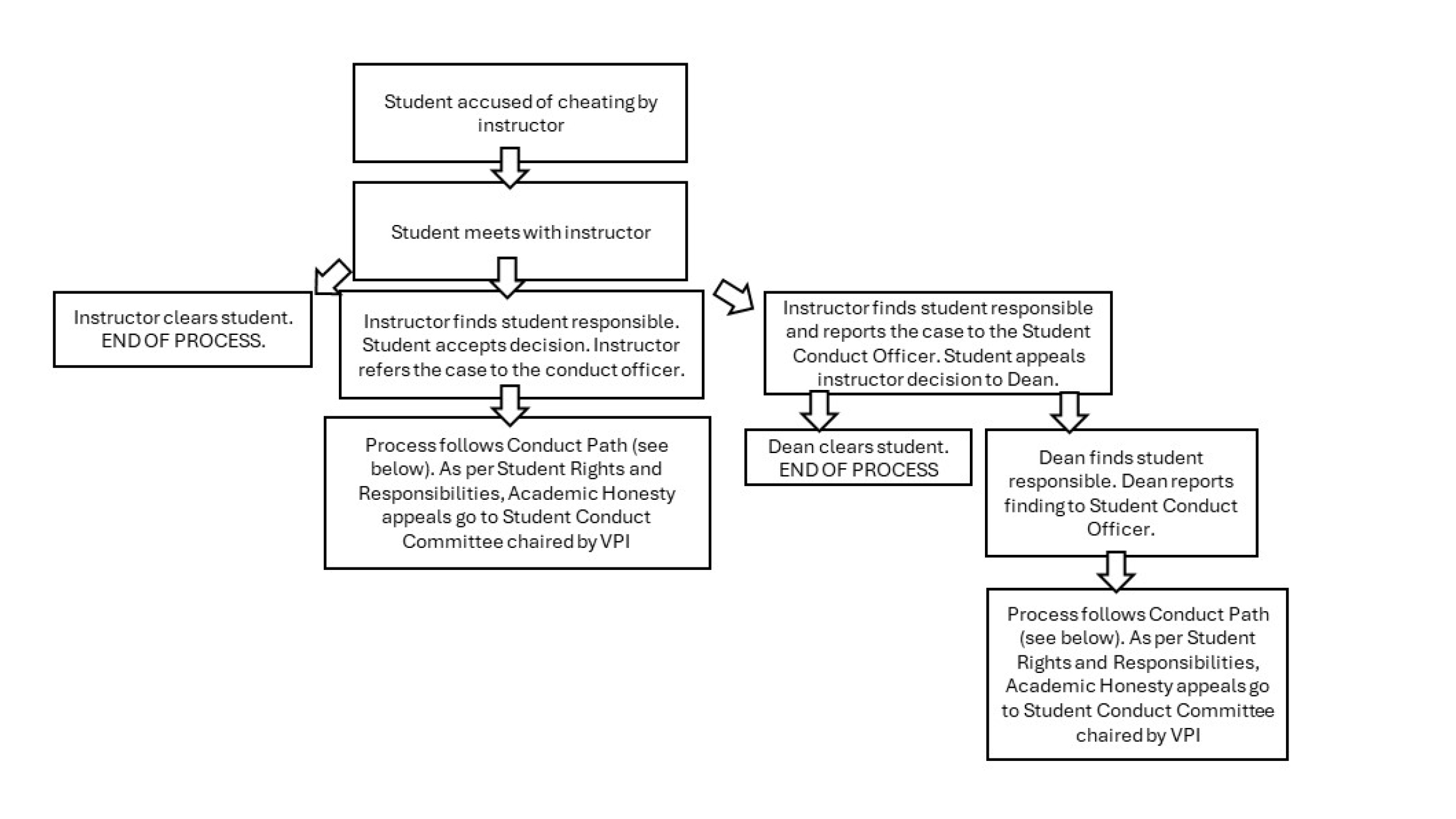
A faculty member accusing a student of academic dishonesty, shall do the following:
- Assemble evidence, including the offending work, statements by any witnesses, and other evidence (like the original source in cases of plagiarism) that support the charge.
- Notify the student about the concerns privately and provide a time and date for a face-to-face meeting to discuss the situation.
- At the meeting, share the evidence with the student and allow them to respond. If the student response adequately responds to the evidence and the instructor determines no academic discipline is needed, no further action is required. If the meeting does not clear the student, the instructor notifies the student that the case will also be reported to the Student Conduct Officer.
- Provide the student a written summary of the meeting and the evidence presented, giving them 21 days to appeal through the appeal process articulated below.
- Fill out a PC CAREs report for a case of academic dishonesty, which goes to the Student Conduct Officer.
Code of Conduct Disciplinary Actions
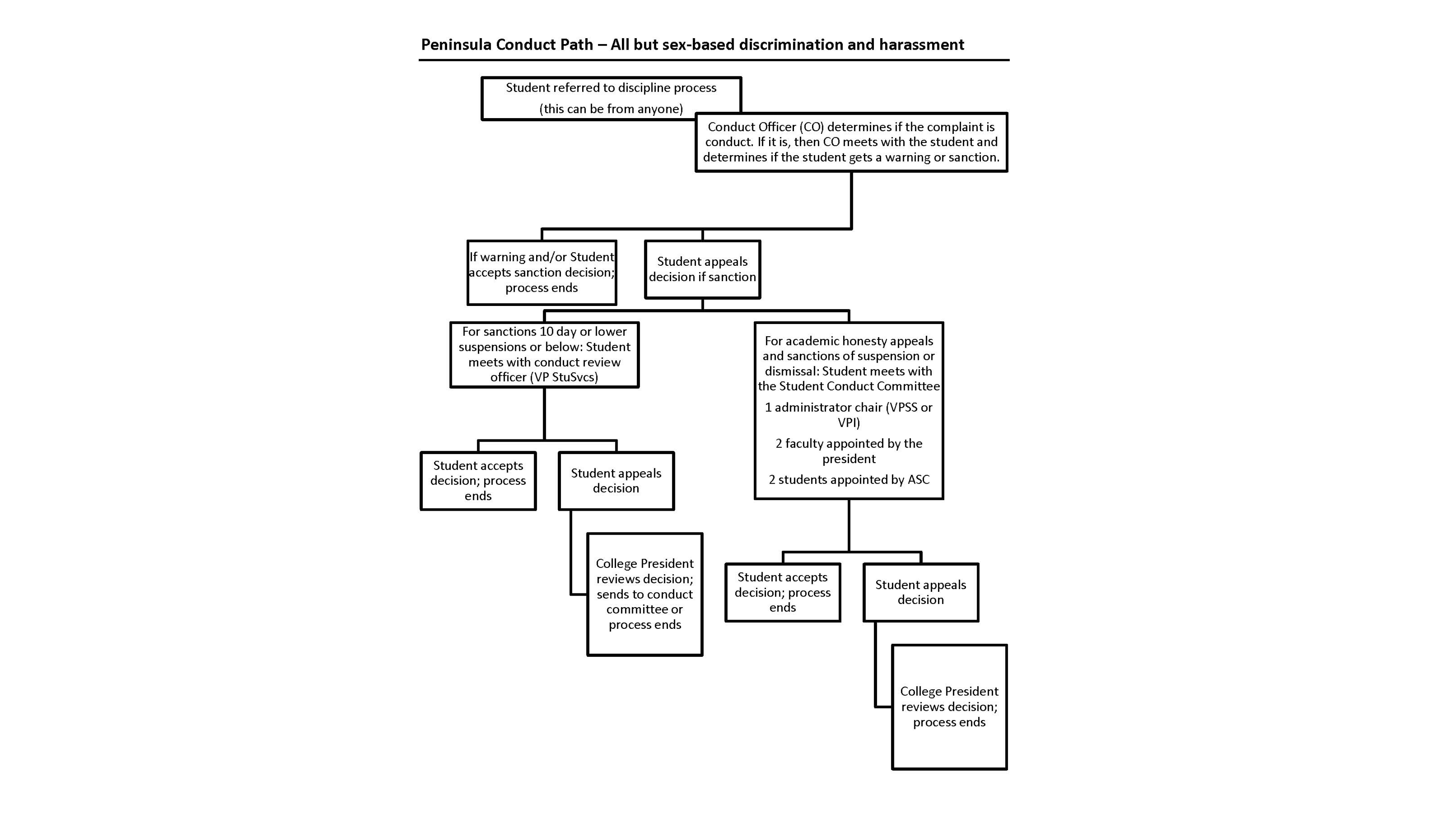
Students may also face conduct disciplinary action due to academic honesty violations. All code of conduct discipline shall be issued by the student conduct officer. If the student elects not to appeal the instructor’s finding that academic dishonesty has occurred, the Student Conduct Officer, upon receiving the conduct report and reviewing evidence provided by the instructor, decides whether further disciplinary action, as outlined by the Student Rights and Responsibilities, will be enacted. The process for that disciplinary action and any appeal of that action follow the Student Rights and Responsibilities unless otherwise amended below.
Student Appeal of Academic Dishonesty Disciplinary Actions
In keeping with the Student Rights and Responsibilities, students in cases of Academic Dishonesty have a right to due process. If a student disagrees with an instructor’s determination that an academic honesty violation has occurred, the following steps are followed:
Step 1: Appeal to Instructor
- The student should collect evidence demonstrating that the work was their own. Decisions of the college will be determined based on admissible evidence.
- Students bear the burden of proving they are the originator of course work. The standard of evidence is the preponderance of the evidence.
- At the one-on-one meeting with the instructor, the student should present their evidence. If the instructor finds the evidence compelling, the instructor may lift the academic disciplinary action and no further action or appeal is necessary.
- Regardless of the outcome of the meeting, the instructor provides a written summary of the meeting and its findings to the student within 7 days.
- If the instructor finds the student in violation of the conduct code, the instructor notifies the Student Conduct Officer of the findings through a PC CAREs report. If the student accepts the instructor’s decision, the Student Rights and Responsibilities process is followed. If the student plans an appeal to the Dean, the Student Conduct Officer views the case as pending.
Step 2: Appeal to Dean
- If the case is not resolved in the one-on-one meeting, the student may submit an appeal, including evidence, to the Dean who supervises the faculty member, within 14 days after the student receives the written summary of the meeting with the faculty member.
- The Dean meets with both the student and the faculty member and reviews the evidence they provide within 14 days.
- The Dean provides a written decision to the student, the faculty member, and the Student Conduct Officer within 7 days after the meeting.
- If the Dean clears the student of violating the academic honesty code, the process ends.
- If the Dean finds the student responsible, the Student Rights and Responsibilities process is followed.
Appeals of conduct officer decisions for academic honesty are heard by the Student Conduct Committee as per the student rights and responsibilities.
Flow Chart:
Conduct Path:
Peninsula College Board Policy
Subject: ACADEMIC HONESTY PROCEDURE
Policy Number: 426.01
Date Adopted: November 18, 2025